BENTO123 GAME ONLINE Tampil sebagai platform inovatif, BENTO123 Game Online x How to Measure Ring Size at Home Without AnyTools (3 Simple Methods 2026) menawarkan pengalaman bermain game online yang unik dan aman. Dengan akses yang mudah dan layanan 24 jam, BENTO123 Game Online memastikan para pemain bisa main game online kapan saja dan di mana saja. Keunggulan platform ini tidak hanya terletak pada variasi gamenya, tetapi juga pada keamanan data pemain yang terjamin, membuat pengalaman bermain semakin nyaman dan menyenangkan.
Sebagai situs resmi, BENTO123 GAME ONLINE menghadirkan berbagai fitur menarik yang mendukung aktivitas main game online Anda. Platform ini menyediakan metode pembayaran yang mudah dan aman, serta menawarkan bonus menarik bagi para pemain setia. Dengan fokus pada fair play dan RTP yang kompetitif, BENTO123 Game Online menjadi pilihan tepat bagi para penggemar game PC maupun game mobile yang mencari pengalaman bermain yang adil dan menguntungkan.
Dalam pengalaman bermain di BENTO123 game online, pemain dapat memanfaatkan tips dan strategi singkat untuk meningkatkan peluang kemenangan mereka. Dengan sistem fair play yang diterapkan, setiap permainan di BENTO123 GAME ONLINE menjamin pengalaman yang menegangkan sekaligus adil. Jangan ragu untuk menjelajahi berbagai fitur dan game yang ditawarkan, serta nikmati sensasi bermain game online dengan cara yang belum pernah Anda rasakan sebelumnya.
BENTO123 GAME ONLINE — How to Measure Ring Size at Home Without AnyTools (3 Simple Methods 2026)
You found the perfect ring It looks exactly right. The design, the metal, the price everything fits. And then you hit the one question that stops everyone: What is my ring size?
If someone you and your family member go to jewellery store and almost 30 minute waste in traffic crowd and after that right ring size don’t find. You should not have to do that. And honestly, you don’t.
In this blog post I will show you three methods to measure your ring size right at home, right now. No special tools needed. No jeweller. No guessing. Just simple steps that actually work. At the end, try the online ring sizer tool no string, no paper, just your screen, done in 30 seconds.
Why Getting Ring Size Right Matters More Than You Think
A ring that is one size too small will not go past your knuckle on a cold morning. A ring one size too big will slip off on a hot day when fingers swell. Getting resized by a jeweller costs money and sometimes permanently weakens the metal especially for rings with intricate designs or stones.
And if you are buying online from Amazon, Daraz, AliExpress, or an international brand returns are a pain. Better to get it right the first time. These three methods take under five minutes each.
Method 1: The String Method (Most Reliable Without Any Tools)
This is the most widely used method and for good reason. It works for every finger, every ring style, and costs nothing.
Step 1: Cut a strip of paper about 15 cm long and half a centimeter wide. Thin strips give more accurate results than thick ones because they do not bunch up.
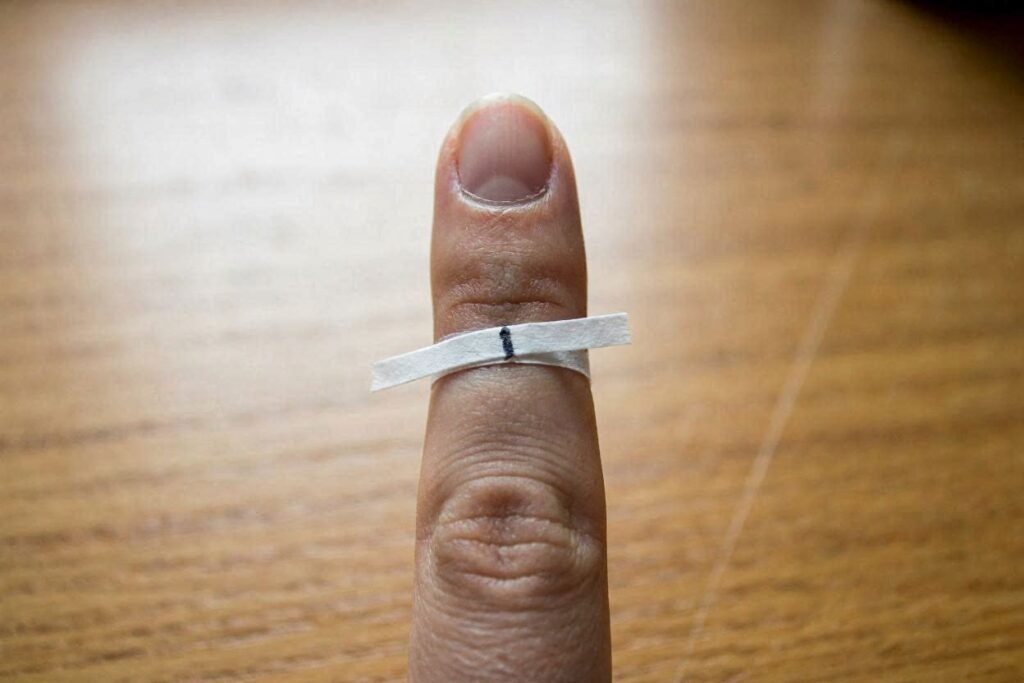
Step 2: Wrap it snugly around the base of the finger where you plan to wear the ring. Snug means comfortable but not tight — you should be able to slide the paper loop off without it catching.
Step 3: Mark the spot where the paper overlaps with a pen. Then remove the paper and lay it flat.
Step 4: Measure the length from the start to your mark in millimeters. This is your finger circumference. Match it to the chart below.
Important tip: Measure at the end of the day, not in the morning. Fingers swell slightly from daily activity and are slightly larger in the evening. A ring sized for morning fingers will feel tight by afternoon.
After measuring your circumference in mm, find your size below. Need to switch units? Convert mm to inches instantly with the free unit converter.
Circumference (mm)
US Size
UK Size
EU Size
India Size
44–45 mm
3
F–G
44
3
47–48 mm
4
H–I
47
5
50–51 mm
5
J–K
50
7
52–53 mm
6
L–M
52
9
54–55 mm
7
N–O
54
10
57–58 mm
8
P–Q
57
12
60–61 mm
9
R–S
60
14
63–64 mm
10
T–U
63
16
66–67 mm
11
V–W
66
18
If your measurement falls between two sizes, always go with the larger one. A ring slightly too big can be resized cheaply. A ring too small cannot be forced on without damaging the ring or your finger.
Method 2: Use an Existing Ring (Diameter Method)
If you have a ring that already fits well, this method is even faster than the string technique.
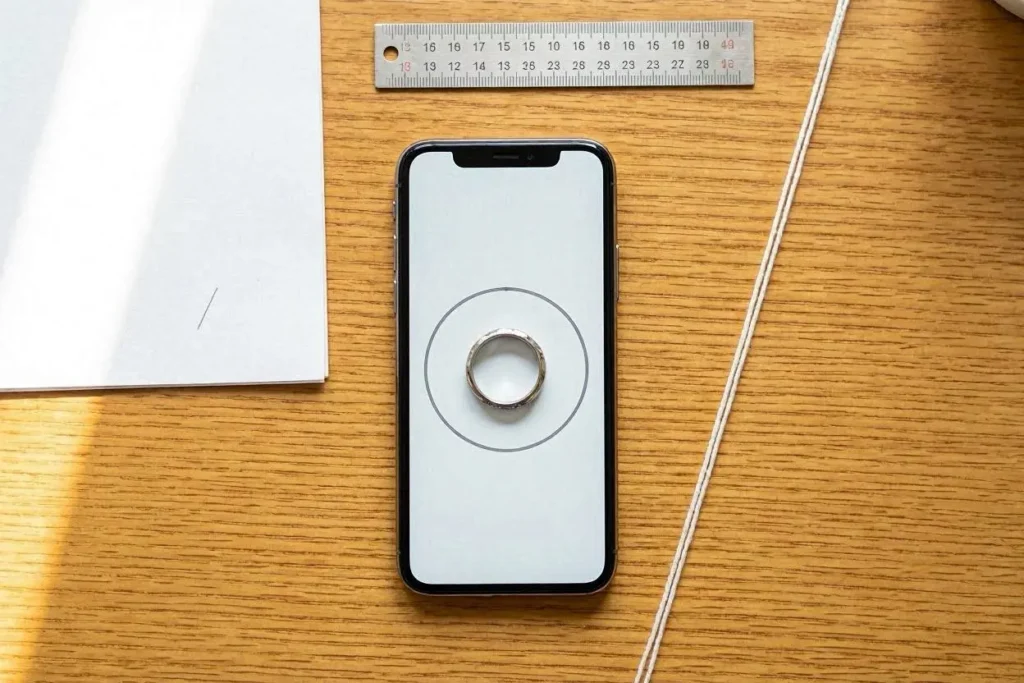
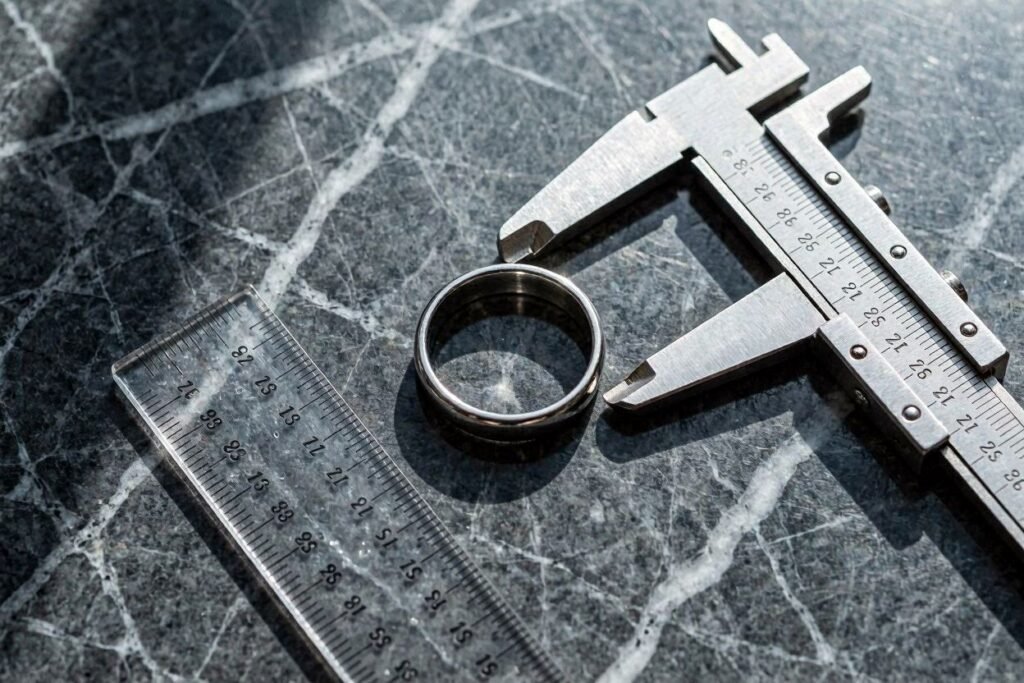
Place the ring on a flat, clean surface. Measure the inner diameter straight across the inside from one edge to the other, not the outside.
Inner Diameter (mm)
US Size
EU Size
India Size
14.1 mm
3
44
3
14.9 mm
4
47
5
15.7 mm
5
50
7
16.5 mm
6
52
9
17.3 mm
7
54
10
18.2 mm
8
57
12
19.0 mm
9
60
14
19.8 mm
10
63
16
20.6 mm
11
66
18
The formula behind this: circumference = diameter × 3.14159. So a 17.3mm diameter ring has a circumference of roughly 54.4mm US size 7. Need to work in inches? The convert mm to inches tool handles it instantly.
Method 3: Use the Free Online Ring Size Tool (No String Needed)
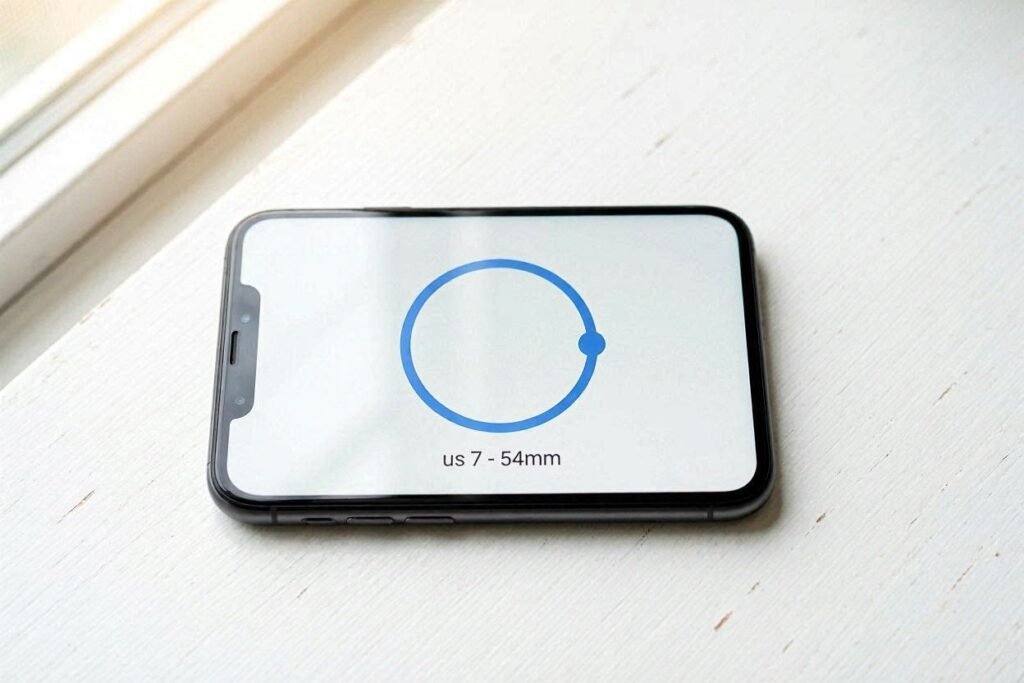
If you do not have string, paper, or an existing ring handy or you just want to double-check the easiest method is to use the online ring sizer tool.
There are three input options:
Slider method: drag until the on-screen measurement matches your ring’s inner diameter
Diameter input: type the number directly if you already measured it
Circumference input: works perfectly after doing the string method above
It shows your size in US, UK, EU, and India formats instantly. No sign-up. No download. No fees. The whole thing works in your browser in about 30 seconds. And because it shows all four international size systems at once, you can shop from any country without cross-referencing multiple charts.
Common Mistakes That Give You the Wrong Size
Mistake
Why It Happens
How to Fix It
Measuring in the morning
Fingers are smallest in AM due to overnight rest
Measure in the evening after normal daily activity
Using thick paper or string
Thick strips add fake millimeters to your reading
Use thin paper or dental floss for accuracy
Measuring outside the ring
Outer diameter is always larger than inner
Always measure inside edge to inside edge
Measuring in cold weather
Fingers contract in cold ring feels too loose later
Measure at room temperature, or size up slightly
Ignoring the knuckle
Ring must pass over your knuckle to fit at all
Measure both finger base AND knuckle — go with the larger
Going smaller between sizes
“It looks close enough” ring gets stuck or falls off
Between two sizes, always go up
FAQ — Quick Answers
My ring size is different on different fingers — is that normal?
Yes, completely normal. Most people have fingers of slightly different sizes. Right hand and left hand can also differ by half a size or more. Always measure the specific finger you plan to wear the ring on.
Can I use the same ring size for all my fingers?
No. Each finger needs its own measurement. Your index, middle, and ring fingers will all have slightly different circumferences.
I measured twice and got different results — which one do I use?
Take three measurements and use the average. Small variations in how you wrap the string are normal. If two of three measurements agree, go with that number.
What is the most common ring size for women?
US size 6 to 7 (EU 51–54, circumference 50–54mm) is the most common range globally. For men, US size 9 to 11 (EU 60–64) is typical though this varies significantly by region and individual.
Ring size chart mein India size alag kyun hoti hai?
India uses its own numeric scale that runs differently from US/UK sizing. This is why measuring in millimeters first is safer mm numbers are universal everywhere. The online ring sizer shows all four systems at once so you never need to guess.
You are installing a shelf that needs to sit at a specific angle. Or a student working through geometry without the right tools. Or a carpenter who left the angle finder in the other bag. Whatever the situation the physical protractor is not here, the measurement still needs to happen. The good news is that…
The shelf you need to measure is right in front of you. The ruler is somewhere in a drawer, probably at the back, definitely not where it should be. You need the measurement now. This happens to everyone. And the answer is not to go hunting it is to look at what is already in…
Construction in Pakistan,India and globally is quoted in feet. Property is listed in square feet. But engineering drawings and technical specifications use meters. Anyone buying property, planning construction, or reading blueprints needs to move between these two units constantly. This guide gives you the full conversion reference, the formula, and real-world examples for rooms, land,…
Most of the world uses centimeters for medical records, school health forms, and official ID documents. However, a large number of people still know their height in feet and inches because that is how it is discussed in daily conversation, especially in countries like the United States, Canada, and the UK. This creates a constant…
You are following a recipe that calls for a 30 cm baking dish. Your measuring tape only shows inches. You are ordering a TV and the listing says 55 inches but your wall measurement is in centimeters. You are buying jeans from a US brand and the inseam is in inches but you only know…
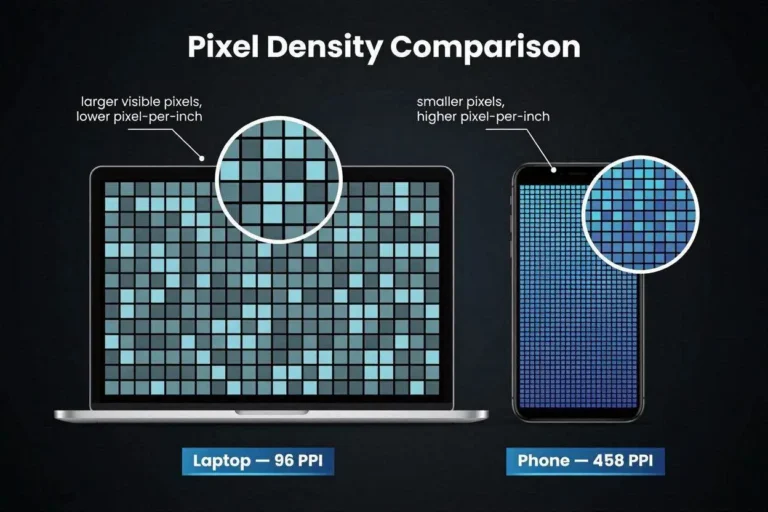
You opened an online ruler on your screen, held up something you know is exactly 10 cm, and the ruler showed 11 cm. Or 9.5. Something was off. So what happened? The answer is PPI – pixels per inch. It is the single most misunderstood factor behind online ruler accuracy, and most people have no…