How to Measure Without a Ruler – 5 Everyday Objects That Work Just as Well (2026)
The shelf you need to measure is right in front of you. The ruler is somewhere in a drawer, probably at the back, definitely not where it should be. You need the measurement now.
This happens to everyone. And the answer is not to go hunting it is to look at what is already in your hand or your pocket. The five methods below use objects you encounter every single day. They are accurate enough for most practical tasks including furniture placement, cooking, crafts, and shipping. And at the end, I will share a free digital option that works on any screen with no guessing at all.
Method 1: Your Credit Card or Bank Card
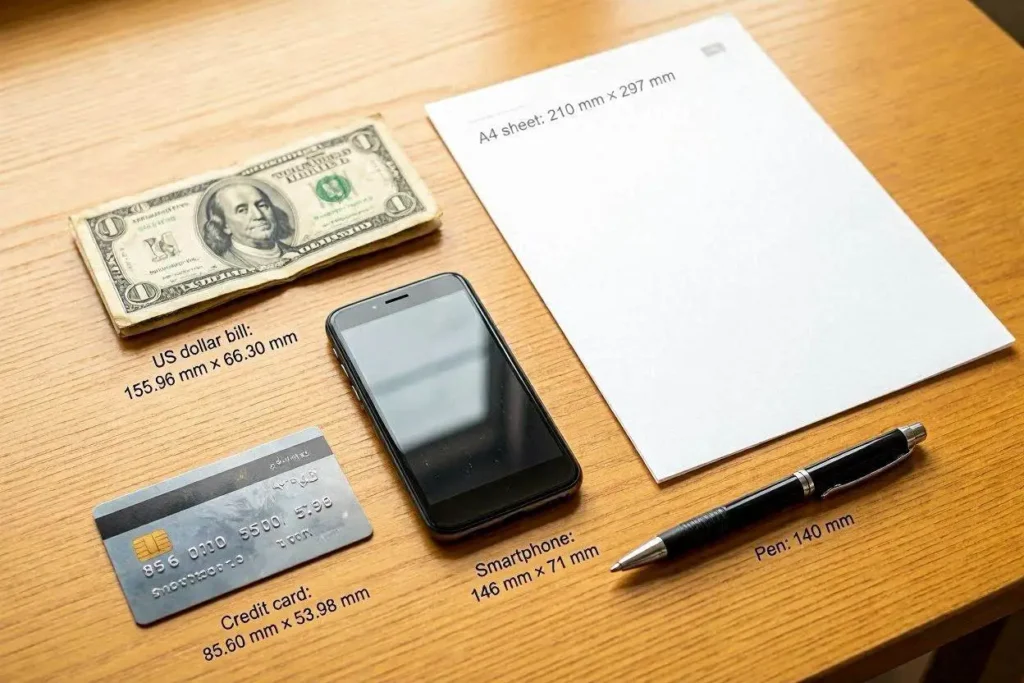
This is the most reliable object-based method because all standard bank cards follow the ISO 7810 ID-1 specification exactly. Every card in your wallet – credit, debit, loyalty, ID – is the same size.
| Measurement | Exact Size |
|---|---|
| Length | 85.6 mm (8.56 cm) |
| Width | 54 mm (5.4 cm) |
| Diagonal | 101.8 mm (10.18 cm) |
How to use it: Lay the card alongside whatever you are measuring. Count how many card-lengths or card-widths fit. Multiply by 8.56 cm or 5.4 cm respectively. For anything smaller than the card, estimate the fraction visually.
Example: You need to know if a decorative box will fit in a gap. The gap fits one card plus a small bit extra – roughly 10 cm total. The card is 8.56 cm so the extra bit is about 1.5 cm. Total: approximately 10 cm. That is working-level accuracy for most placement decisions.
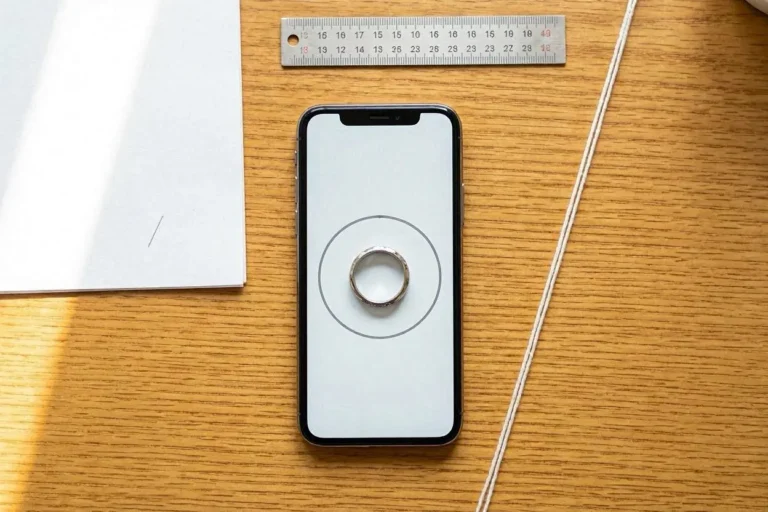
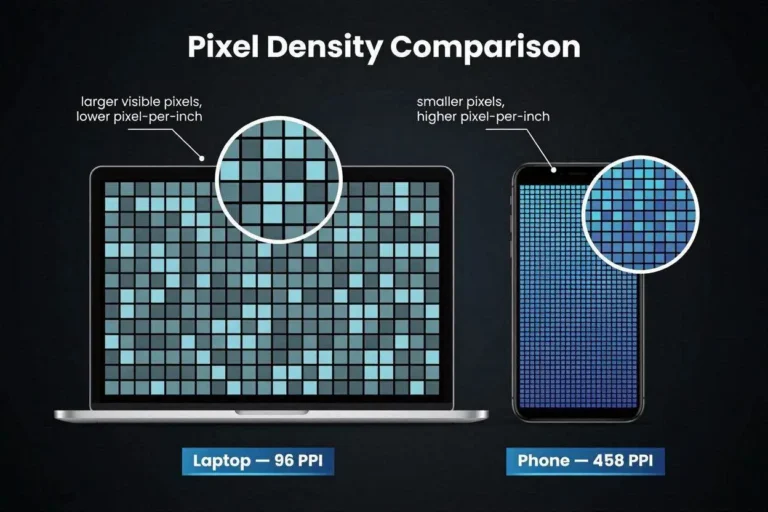
The main Online Ruler at onlineruler.online actually uses a credit card for calibration – you hold your card against the screen and the ruler adjusts itself for your exact screen’s pixel density. Smart shortcut.
Method 2: A Standard Sheet of Paper (A4 or Letter)
Paper is one of the most underrated measuring tools because the dimensions are international standards.
| Paper Type | Width | Height |
|---|---|---|
| A4 (used in Pakistan, India, UK, Europe) | 21 cm | 29.7 cm |
| US Letter (used in USA) | 21.6 cm | 27.9 cm |
Fold the paper in half lengthwise and you have a strip roughly 10.5 cm wide. Fold it again: about 5.25 cm. These folds let you create quick reference lengths without any drawing or marking.
Fold the paper into thirds across its length: each section is about 7 cm. Useful for estimating gaps in shelving or plant spacing in a garden.
For larger measurements, fold two sheets together end to end – that gives you 59.4 cm (about 60 cm) for A4.
Method 3: A Standard Pen or Pencil
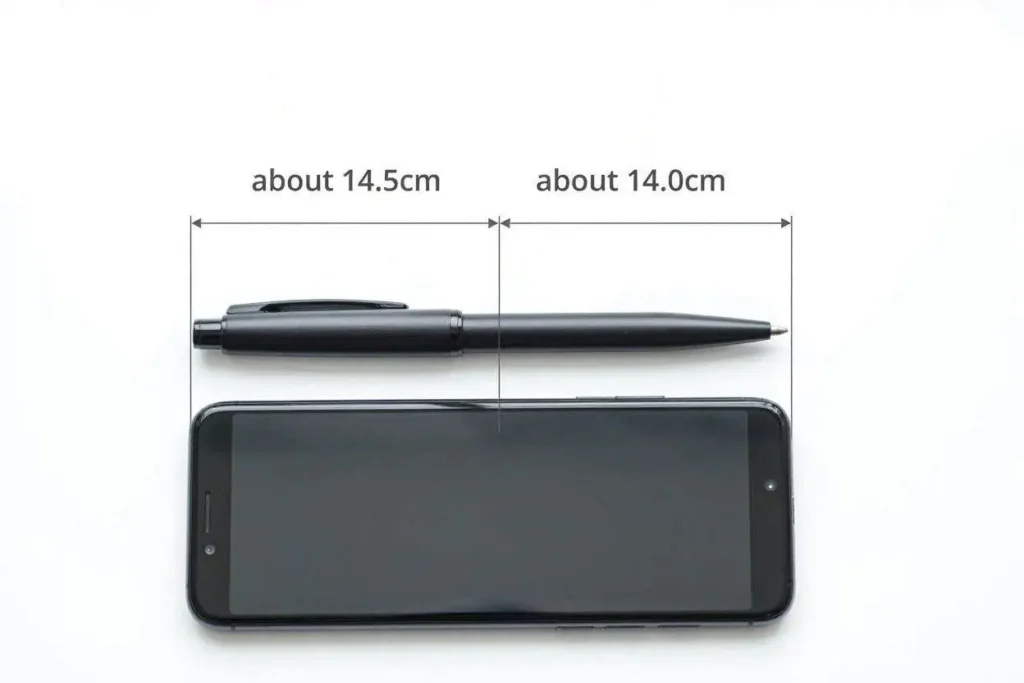
A standard full-length ballpoint pen (the kind you get from offices or hotels) is consistently 14.5 to 15 cm long. A standard wooden pencil before sharpening is 19 cm. A half-used pencil is harder to use but remember that most pencil erasers alone are about 1 cm long.
These are great for rough measurements of medium-sized objects – books, electronics, bags. Lay the pen alongside the object and count how many pen-lengths it spans.
Two full pens end to end = approximately 29-30 cm. Almost a ruler’s worth.
Method 4: Your Hand and Fingers
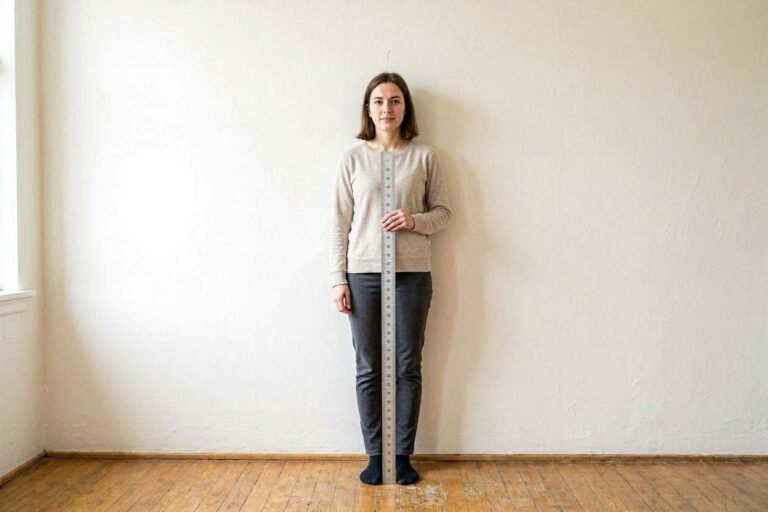
Your body is a surprisingly consistent measuring instrument – especially once you know your own measurements. Spend two minutes measuring yourself once and you have a personal measuring tool always with you.
| Body Reference | Typical Range | How to Use |
|---|---|---|
| Tip of thumb to first knuckle | 2.5 – 3 cm | Measure small items, coin diameters, jewelry widths |
| Width of your palm (four fingers flat) | 7.5 – 9 cm | Estimate widths of books, boxes, phone stands |
| Hand span (thumb tip to pinky tip, spread wide) | 17 – 22 cm | Medium widths, frame sizes, laptop widths |
| Forearm (elbow to wrist) | 25 – 30 cm | Larger items, shelf gaps, drawer widths |
Measure your own hand now and note the actual values. Most people’s thumb-knuckle is close to 2.5 cm and their hand span close to 20 cm – but these vary enough between individuals that a personal calibration is worth doing once.
Method 5: Your Smartphone
Your phone’s screen dimensions are printed in its specifications. You can look these up in two minutes and then use the phone itself as a ruler.
| Common Phone | Width | Height |
|---|---|---|
| iPhone 14 / 15 | 7.16 cm | 14.67 cm |
| Samsung Galaxy S24 | 7.03 cm | 14.70 cm |
| Samsung Galaxy A54 | 7.73 cm | 16.25 cm |
| iPhone 15 Pro Max | 7.75 cm | 15.99 cm |
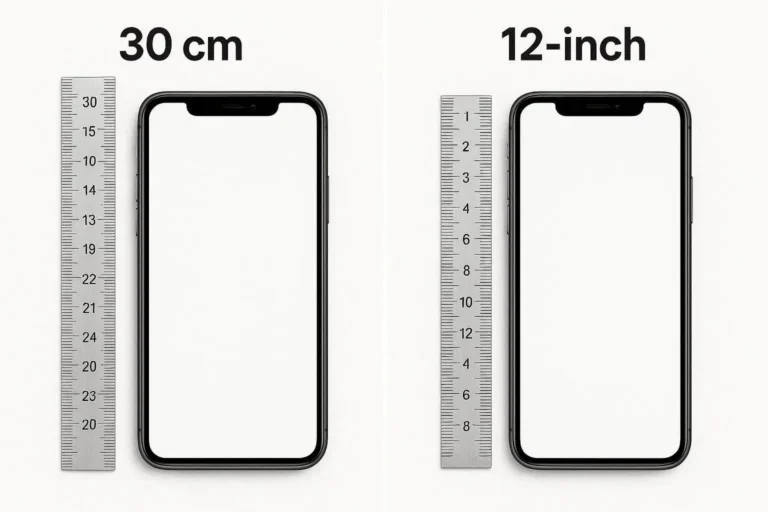
You can also skip the manual method entirely. The Online Ruler converts your screen into a working ruler by detecting your device’s PPI and calibrating the scale precisely. Open it on your phone and you have a proper ruler in your hand in about five seconds.
Try it at onlineruler.online – works on Android and iPhone with no app installation needed. The Screen Ruler tool can also measure your screen’s exact diagonal if you need that for comparison purposes.
Accuracy Tips for Object-Based Measuring
- Always mark a reference point before counting lengths – sliding objects while counting leads to errors
- Use a straight edge (like the edge of a door frame or a table) as a baseline to keep measurements aligned
- For anything requiring precision under 5mm, use the digital ruler – object-based methods have too much margin of error at that scale
- When measuring height (vertical), be aware that slight tilts in your reference object add error quickly
- Double-check any critical measurement twice using two different methods
When to Use the Digital Option Instead
Object-based methods are excellent for quick estimates. But there are situations where you want real accuracy:
- Cutting material for a craft or DIY project where 2-3mm matters
- Measuring a parcel for shipping where dimensions affect the cost bracket
- Checking if a piece of furniture will clear a doorframe by less than 5 cm
- Comparing product dimensions from different sellers to find the closest match
For all of these, the Online Ruler at onlineruler.online gives you accurate measurements directly on screen in CM, MM, and inches – calibrated to your device automatically.
Frequently Asked Questions
For most practical purposes – furniture placement, cooking, packing boxes – accuracy within 5-10mm is sufficient. These methods deliver that comfortably. For precision tasks like cutting or fitting, use a proper ruler or the digital online ruler.
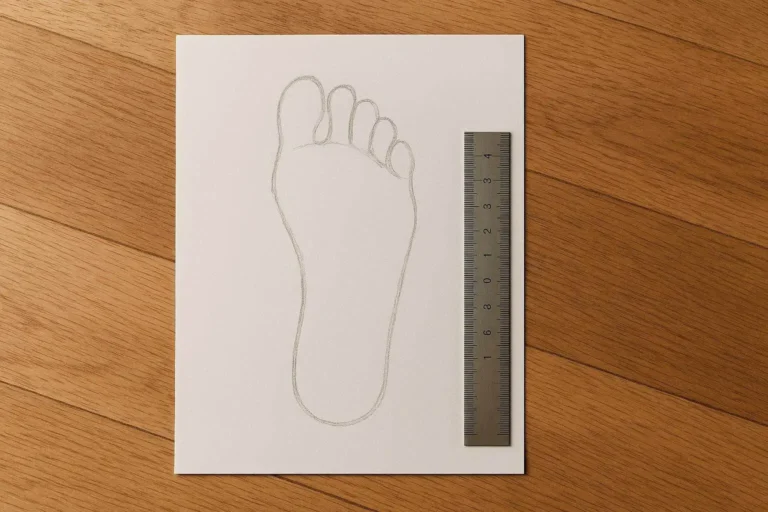
Yes – use the paper method. Trace your foot on A4 paper, then measure the outline using card lengths or another reference object. Or use the Online Ruler on your screen for a more precise reading.
The credit card wins because its dimensions are internationally standardized and do not vary. Paper comes second. Body measurements come third because they vary between individuals.
If you need to convert your object-based measurements between CM and inches, the Unit Converter at onlineruler.online handles that instantly.